Driving Excellence in KSA Power Projects
A Deep Dive into the PMI Code of Ethics & Professional Conduct
Dear Friends and Professionals,
🤝 𝗚𝗿𝗲𝗲𝘁𝗶𝗻𝗴𝘀! I hope you are doing well!
I am pleased to share Article# PMP-01 of the PMP Series.
Managing complex EPC power projects in Saudi Arabia demands more than technical skill—it requires an unyielding commitment to ethical practice.
The PMI Code of Ethics outlines four core values that serve as our operational blueprint to protect resources, ensure safety, and build trust with clients like SE:
1️⃣ Responsibility: Taking ownership of decisions, ensuring strict quality and safety compliance on-site even when schedules face pressure.
2️⃣ Respect: Valuing our diverse, multicultural workforce and protecting the critical engineering assets and environment entrusted to us.
3️⃣ Fairness: Making impartial, objective procurement choices free from favoritism or family conflicts of interest.
4️⃣ Honesty: Communicating transparently with clients and stakeholders regarding delays—because bad news does not improve with age.
Standardizing these values drives operational excellence and strengthens project outcomes across the Kingdom’s energy sector.
📖 Read full article below.
If you find this content useful, pls like and share this post.
Learn > Share > Grow
| DRIVING EXCELLENCE IN THE KSA POWER SECTOR A Deep Dive into the PMI Code of Ethics & Professional Conduct |
Engr. Muhammad Akram Sadiq PMP®
Sr. Electrical Engineer / Projects Manager
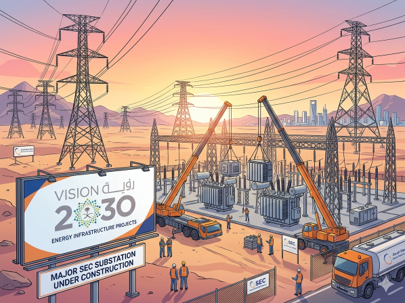
In Saudi Arabia’s rapidly evolving energy landscape — driven by ambitious Vision 2030 megaprojects, massive grid expansions, and the integration of renewable energy—managing complex engineering, procurement, and construction (EPC) projects is no small feat. Constructing electrical substations and power plants demands more than just technical expertise and rigorous scheduling; it requires an unyielding commitment to ethical practice.
The Project Management Institute (PMI) Code of Ethics and Professional Conduct outlines four core values that serve as the foundation for professional excellence: Responsibility, Respect, Fairness, and Honesty.
For a general contracting company operating in the KSA power sector, these aren’t just abstract moral concepts—they are operational blueprints that prevent catastrophic failures, build long-term trust with clients like SE (Saudi Energy), and protect the workforce.
1. Responsibility: Ownership in High-Stakes Engineering
| PMI Definition: Responsibility is our duty to take ownership for the decisions we make or fail to make, the actions we take or fail to take, and the consequences that result. |
In the power sector, a single sub-standard decision can lead to localized blackouts, millions of Riyals in liquidated damages, or severe arc-flash injuries. Taking ownership means adhering strictly to safety, quality, and environmental regulations, even when facing tight deadlines.
Practical Application in KSA Power Projects:
Imagine your team is commissioning a 380kV Gas-Insulated Substation (GIS). During pre-commissioning tests, a junior testing engineer notices a slight anomaly in the gas density monitoring system of a circuit breaker. Fixing it properly requires delaying the energization schedule by three days—a delay that will trigger a massive milestone penalty from the client.
| ⚖️ The Ethical Action: Applying the value of Responsibility, the Project Manager takes ownership of the flaw rather than sweeping it under the rug. They report the issue transparently to the client, halt the energization, and rectify the gas system. They accept the immediate schedule consequence to ensure the long-term safety and reliability of the Kingdom’s power grid. |
2. Respect: Valuing People, Equipment, and the Environment
| PMI Definition: Respect is our duty to show a high regard for ourselves, others, and the resources entrusted to us—including people, money, reputation, safety, and natural resources. An environment of respect engenders trust and performance excellence by fostering cooperation and valuing diverse perspectives. |
Power projects in KSA inherently bring together highly diverse, multicultural workforces—from local Saudi engineers entering the market through Saudization initiatives, to international specialized consultants and multinational expat laborers.
Practical Application in KSA Power Projects:
• Respecting Diverse Perspectives: On a combined-cycle power plant project site, a disagreement arises between a Western specialist consultant and a local civil engineer regarding the foundation pouring method under extreme summer heat. A respectful PM facilitates a collaborative technical review meeting where both viewpoints are evaluated objectively, leveraging the diverse expertise to find an optimal solution rather than pulling rank.
• Respecting Resources: Large-scale energy projects are asset-heavy. Respecting resources means ensuring rigorous lockout-tagout (LOTO) safety protocols are strictly enforced to protect human life, and deploying eco-friendly disposal mechanisms for hazardous materials like transformer oil or SF6 gas, thereby preserving Saudi Arabia’s natural environment.
3. Fairness: Impartiality in Procurement and Subcontracting
| PMI Definition: Fairness is our duty to make decisions and act impartially and objectively. Our conduct must be free from competing self-interest, prejudice, and favoritism. |
The procurement phase of a power project is massive, involving millions of dollars in material packages—from heavy power transformers and switchgear to specialized control systems and protection relays etc. Fairness ensures that the supply chain is resilient, cost-effective, and transparent.
Practical Application in KSA Power Projects:
Your contracting company is floating a tender for the civil works of a new solar-PV integration substation. One of the bidding local subcontractors is owned by a close cousin of your procurement manager. The cousin’s bid is slightly higher and lacks some necessary technical qualifications, but the procurement manager is being pressured by family ties to award them the contract.
| ⚖️ The Ethical Action: To uphold Fairness, the procurement manager must formally disclose this conflict of interest to the project steering committee and recuse themselves from the evaluation process. The contract must be evaluated strictly on objective criteria: technical competence, financial health, safety records, and price competitiveness. This maintains the integrity of the contractor’s reputation in the Saudi market. |
4. Honesty: Truthfulness in Project Reporting
| PMI Definition: Honesty is our duty to understand the truth and act in a truthful manner both in our communications and in our conduct. |
In heavy infrastructure, bad news does not improve with age. Honesty builds the psychological safety required for teams to catch errors early, before they become embedded in concrete or energized with high voltage.
Practical Application in KSA Power Projects:
During the construction of a power plant, a critical shipment of specialized alloy piping from an international manufacturer, delayed at the Jeddah port due to customs paperwork errors, pushing back the critical path by four weeks.
| ⚖️ The Ethical Action: Instead of manipulating the Primavera P6 schedule or inflating progress percentages in the monthly report to hide the delay from the client, the project controls team practices absolute honesty. They present the client with the accurate delay, explain the root cause, and simultaneously present a proactive mitigation “crash” plan (such as introducing night shifts or splitting the construction zones) to recover the lost time. The client’s trust is preserved because they were given the truth in time to adjust their own downstream operations. |
Conclusion: Ethics as a Competitive Advantage
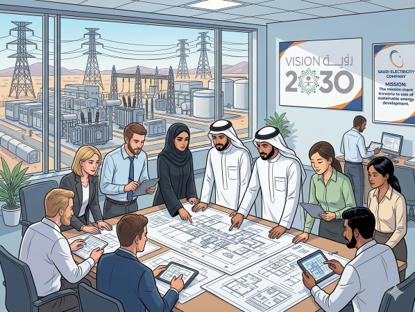
In the KSA power sector, adherence to the PMI Code of Ethics is not just a regulatory checkbox; it is a strategic asset. When a general contractor embeds Responsibility, Respect, Fairness, and Honesty into its corporate culture, projects experience fewer safety incidents, build stronger relationships with stakeholders like SE, Ministry of Energy, and Aramco, and ultimately deliver the robust infrastructure needed to power the Kingdom’s future.
ANNEXURE: